
Latest News
2025.12.26
Breakthrough in Reproductive Medicine: Lee Women’s Hospital and National Chung Hsing University Receive the 22nd National Innovation Award for a World-First Non-Invasive Embryo Mitochondrial Testing Platform
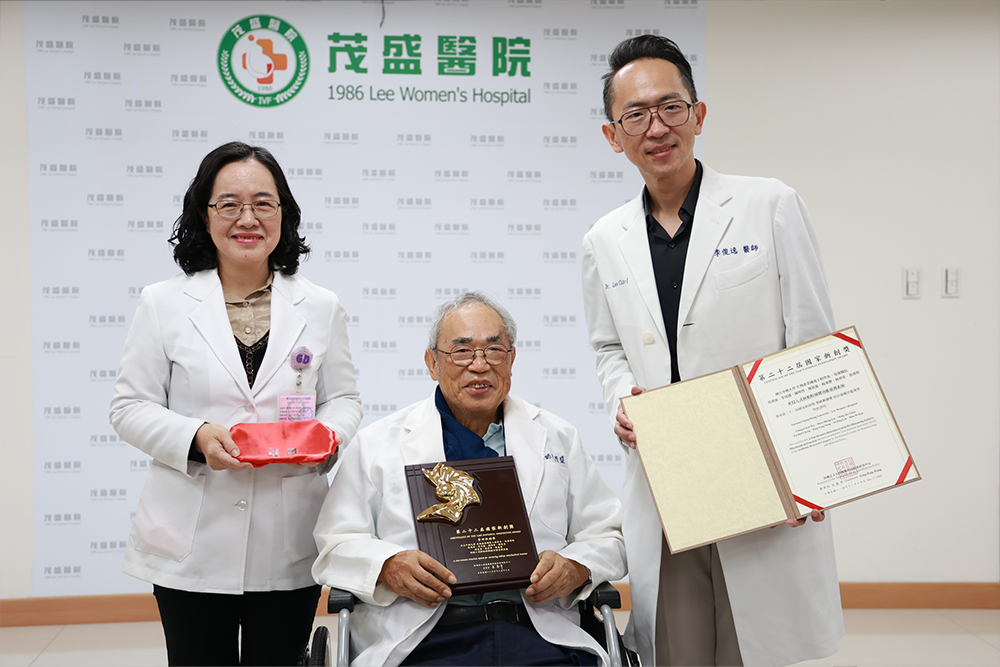
The "Non-invasive Embryo Mitochondrial Function Measurement System," jointly developed by Lee Women's Hospital and National Chung Hsing University, can monitor the respiratory status of embryos to assess their quality and has been honored with the 22nd National Innovation Award. CEO Lee Chun-I emphasized that this technology is a first in Taiwan and is currently the only embryo mitochondrial function detection platform in the world. It is regarded as an important milestone in the next generation of precision reproductive medicine, benefiting women with habitual miscarriage, multiple implantation failures, advanced age, or fewer embryos, as well as those who do not wish to increase invasive testing. Dr. Cheng En-Hui from the Genetic Laboratory stated that in addition to human reproductive medicine, this technology can also be extended to embryo selection for high-economic-value livestock such as dairy cows, Wagyu beef, and breeding horses, and even expanded to drug metabolism evaluation of 3D cancer spheroids, providing a brand-new tool for precision medicine and regenerative medicine. Director Lee Mao-Sheng pointed out that it is conservatively estimated that this technology will create an annual output value of 2 billion TWD domestically and over 100 billion TWD globally.
Developed Over 3 Years, the 'Non-invasive Embryo Mitochondrial Function Measurement System' Wins the National Innovation Award
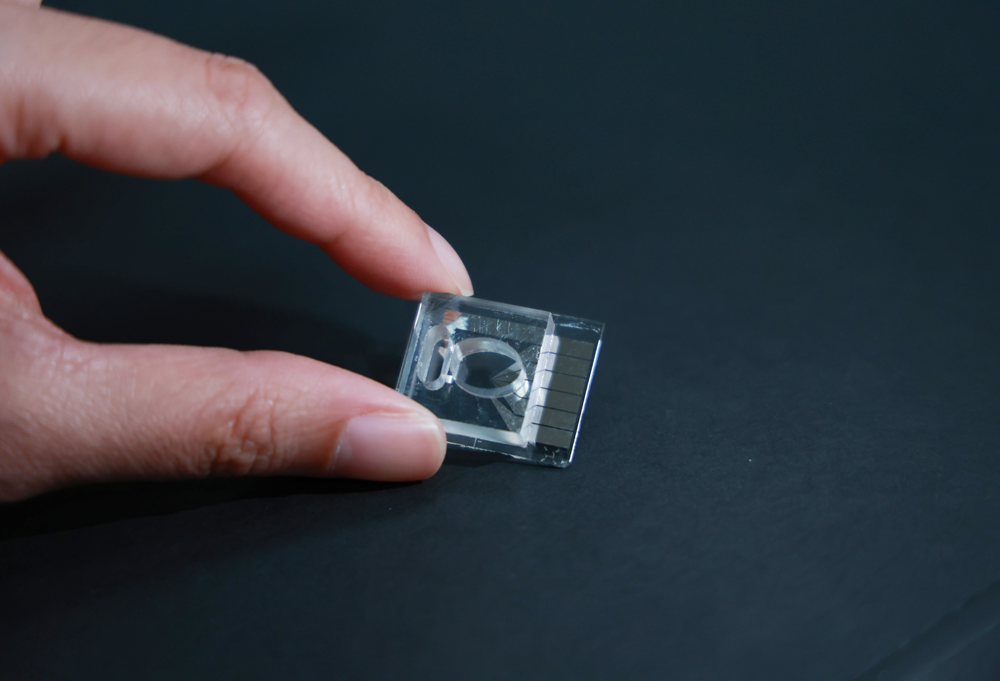
▲ The "Non-invasive Embryo Mitochondrial Function Measurement System" operates thanks to this newly developed chip.
After 3 years of development with a 20 million TWD subsidy from the National Science and Technology Council, the "Non-invasive Embryo Mitochondrial Function Measurement System" has finally been completed and won the 22nd National Innovation Award. The award ceremony was held on 2025/12/17 at the Hennessy Hotel in Taipei. The research and development team, composed of the Lee Women's Hospital Genetic Laboratory, medical team, and Life-long Distinguished Professor Wu Jing-Zhou from Chung Hsing University, received the trophy from Director-General Chiu Chiu-Hui of the Industrial Development Administration, Ministry of Economic Affairs, symbolizing a major breakthrough for Taiwan's reproductive medical technology on the international stage. The National Innovation Award jury pointed out that the system can monitor the respiratory status of embryos to assess their quality, possessing high innovation and clinical feasibility. It can evaluate mitochondrial function in real-time and quantitatively during the embryo culture process, and small-scale embryo testing has been initially completed, shortening clinical operation time to between 2 and 15 minutes. Currently, the technology has completed animal experiments and pre-clinical human embryo validation, proving it can effectively assess embryo respiratory capacity based on hatching rates, which is highly correlated with the overall pregnancy success rate.
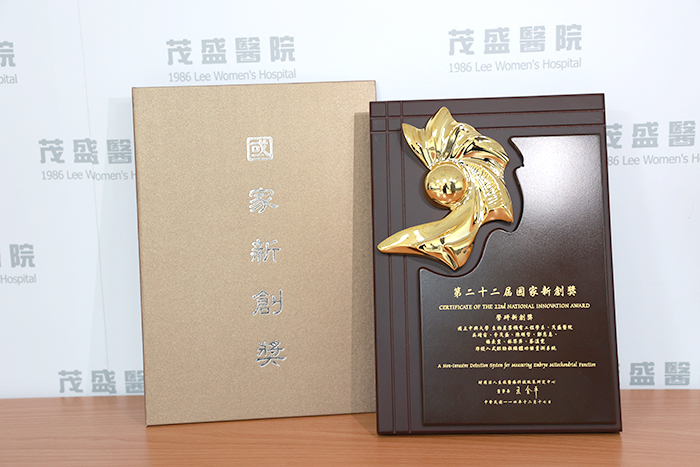
▲ National Innovation Award
The World's First Embryo Implantation Potential Screening Platform Integrating Multiple Key Characteristics, Benefiting the Development of Reproductive, Precision, and Regenerative Medicine

CEO Lee Chun-I of Lee Women's Hospital explained that older women often have poorer embryo quality and higher chromosomal abnormality rates, making it difficult for embryos to implant after transfer, or even leading to recurrent miscarriages. This is highly likely due to insufficient embryo energy, resulting in the inability to complete subsequent development and continued pregnancy. Therefore, by monitoring the oxygen consumption rate of embryo mitochondria—understanding the embryo's respiratory status to assess its quality and energy condition—it serves as a brand-new tool for embryo selection! Women with habitual miscarriage, multiple implantation failures, advanced age, or fewer embryos, and those who do not wish to increase invasive testing, are very suitable for this technology. In short, the "Non-invasive Embryo Mitochondrial Function Measurement System" is the world's first blastocyst implantation potential screening platform that integrates multiple key characteristics. It breaks through the limitations of current embryo assessments that mostly rely on morphological judgments, providing clinical physicians with a more scientific and objective basis for decision-making, demonstrating high originality, clinical value, and market potential. Secondly, through precise screening of high-metabolism, high-potential quality blastocysts, it can effectively reduce the probability of implantation failure and repeated cycles, alleviating the physical, mental, and economic burden on patients, and helping to improve doctor-patient relationships and overall medical quality. Thirdly, this technology is a concrete result of industry-academic-medical translational cooperation, with pre-clinical sample testing completed at Lee Women's Hospital and validated in conjunction with Chung Hsing University and Chung Shan Medical University. In the future, it can further integrate artificial intelligence and embryo screening big data to establish a multi-parameter cloud diagnosis platform, promoting the development of smart reproductive medicine. Finally, Dr. Cheng En-Hui of the Genetic Laboratory pointed out that in addition to human reproductive medicine, this system is also applicable to embryo selection for high-value livestock and can be extended to drug metabolism evaluation for cancer 3D spheroids, showing high scalability in the fields of precision medicine and regenerative medicine.
Taiwan's First to Measure Embryo Mitochondrial Respiratory Status (Oxygen Consumption) to Distinguish Quality, Breaking Through the Technical Bottleneck of Observing 3D Spherical Structures
Dr. Cheng En-Hui stated that mitochondria are like the power plants within cells, responsible for supplying the energy cells need. Embryos have extremely high energy demands during the implantation process; success is closely related to mitochondrial function, and one of the key indicators of mitochondrial productivity is the oxygen consumption rate (OCR). By measuring the embryo's oxygen consumption—its respiratory status—one can grasp its metabolic activity and energy usage, thereby serving as an important basis for assessing embryo quality and implantation potential. However, embryos are 3D spherical structures, and traditional planar cell measurement techniques are difficult to apply, becoming a long-term technical bottleneck. To overcome this challenge, the research team successfully developed a micro-process chip, designing a discontinuous-wall multi-layer concentric stepped structure to stably fix the embryo and precisely configure the optimal distance between the dissolved oxygen electrode array and the embryo. Ultimately, they established a non-invasive measurement platform that can be easily operated by embryologists and possesses high stability. It has recently obtained Taiwan Invention Patent I891451, and patent reviews are also underway in the United States, the European Union, and Japan.Estimated Annual Market Output Value of the 'Non-invasive Embryo Mitochondrial Function Measurement System' Will Exceed 2 Billion TWD in Taiwan and 100 Billion TWD Globally
Due to late marriage, late childbirth, and work pressure, the proportion of infertility patients is rising steadily. According to the 2023 Assisted Reproductive Technology Implementation Result Analysis Report released by the Ministry of Health and Welfare, the average age of women undergoing IVF treatment has reached 38.2 years, and the declining birthrate has become a national security issue. In recent years, governments around the world (Taiwan, Japan, South Korea, Singapore, parts of China, France, Sweden, Denmark, the Netherlands, Spain, Germany, Austria, Poland, Israel, Australia, etc.) have implemented IVF subsidy policies, leading to a steady increase in the number of people receiving IVF.The 2022 Assisted Reproductive Technology Implementation Result Analysis Report announced by the Health Promotion Administration in 2024 shows that there were a total of 58,476 treatment cycles (referring to the IVF-ET process) in 2022, and the number of IVF cases in 2022 grew by 15% compared to 2021. Leveraging Taiwan's advantage of being number one in the world for chips, Lee Women's Hospital and Chung Hsing University have teamed up to pioneer the development of the "Non-invasive Embryo Mitochondrial Function Measurement System," which is expected to effectively improve the pregnancy success rate for older women and help improve the problem of declining birthrates in Taiwan. From an industrial perspective, the embryo testing-related market is approximately 5 billion USD. Director Lee Mao-Sheng pointed out that it is estimated that this technology will exceed an annual output value of 2 billion TWD domestically and over 100 billion TWD globally, with the potential for subsequent commercialization and international export being highly anticipated.